Best Places to Buy Property in the Philippines in 2026: Top Cities & Provinces
Where are the best places to buy property in the Philippines in 2026?
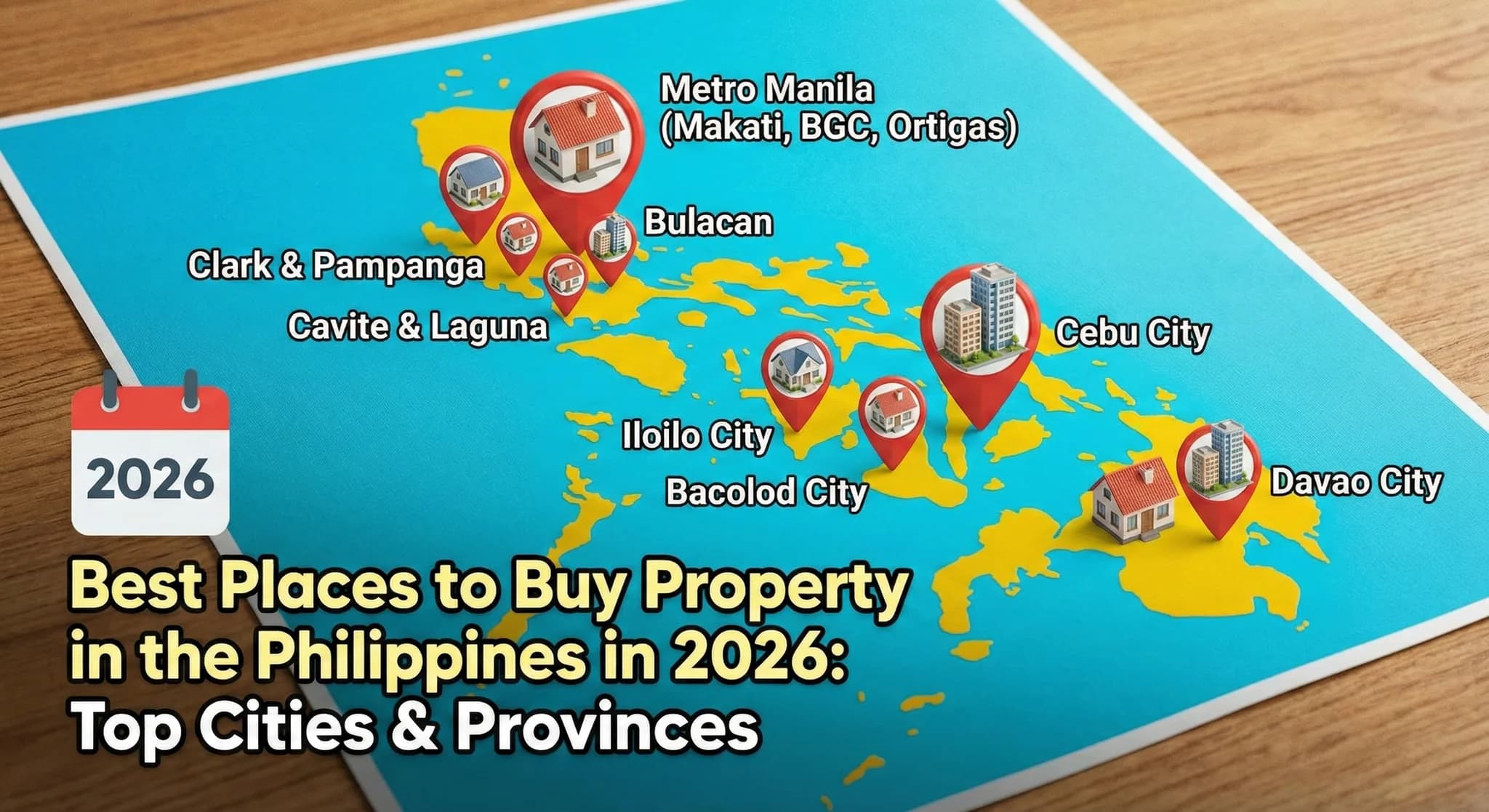
The best places to buy property in the Philippines in 2026 include Makati and BGC in Metro Manila for rental income, Cebu City for balanced growth and tourism, Cavite and Bulacan for affordable house-and-lot investments, Pampanga and Clark for infrastructure-driven appreciation, and Davao City for stability in Mindanao. Each location serves different investment goals ranging from high rental yield to long-term capital appreciation.
The Philippines is not a single real estate market—it’s a collection of distinct, interconnected markets shaped by local economies, infrastructure, demographics, and lifestyle preferences. Choosing where to buy depends on your goals: are you seeking monthly rental income, long-term capital appreciation, a family home for retirement, or a vacation property with Airbnb potential?
This guide breaks down the top locations for Philippine property investment in 2026, with specific insights on what each area offers and who it’s best suited for.
Metro Manila: The Capital Region
Makati CBD
Best for: High rental yield, corporate tenants, liquidity
Makati remains the blue-chip choice for Philippine real estate investment. As the country’s financial capital, it hosts the headquarters of major banks, multinational corporations, and the Philippine Stock Exchange. Rental demand is driven by executives, BPO professionals, and expatriates who prioritize proximity to their offices.
Rental yields in Makati average 6–8% for well-located condominium units, with high-street retail rents continuing to rise. The area benefits from mature infrastructure, established commercial activity, and strong resale liquidity.
Bonifacio Global City (BGC)
Best for: Premium tenants, modern lifestyle, long-term appreciation
BGC has evolved into Metro Manila’s most modern and walkable business district. It attracts a younger, more affluent demographic including tech workers, creative professionals, and foreign executives. Property values here have shown remarkable long-term appreciation—land prices have increased roughly tenfold since 2008.
The area’s master-planned layout, green spaces, international schools, and dining scene make it especially attractive for families and long-term residents. New mixed-use developments continue to add to BGC’s appeal.
Ortigas Center and Eastwood City
Best for: BPO workforce housing, lower entry price than Makati/BGC
Ortigas and Eastwood consistently maintain some of the lowest vacancy rates in Metro Manila—as low as 5.7% for Eastwood and 7% for Ortigas as of mid-2025. These areas offer more affordable entry points while still benefiting from strong BPO-driven tenant demand. For investors with a smaller budget who want Metro Manila exposure, these districts offer a compelling value proposition.
Cebu: The Queen City of the South
Best for: Balanced growth, tourism, BPO demand, lower cost of entry
Cebu is the Philippines’ second-largest real estate market and arguably its most diversified. The city benefits from a thriving BPO sector, a robust tourism industry centered on nearby beach destinations, and growing industrial and logistics operations.
Cebu’s cost of entry is significantly lower than Metro Manila, and its rental market is supported by both long-term tenants and short-term vacation rentals. The city’s international airport, expanding road network, and rising middle class make it an increasingly attractive alternative to the capital for both investors and end-users.
Cebu’s IT Park and Cebu Business Park are the primary hubs for office and residential demand, while areas like Mactan and Lapu-Lapu attract resort-style developments and vacation properties.
Cavite, Bulacan, and Laguna: The Southern and Northern Growth Corridors
Best for: Affordable house-and-lot investments, OFW family homes, long-term appreciation
These provinces surrounding Metro Manila have become the primary destinations for Filipino families—including millions of OFW households—seeking affordable house-and-lot properties. The dream of owning a standalone home with a yard remains deeply rooted in Filipino culture, and these areas deliver on that aspiration at price points far below Metro Manila.
The government’s Build Better More infrastructure program is the key catalyst here. New expressways, the LRT-1 Cavite Extension (partially operational since late 2024), and planned rail connections are dramatically reducing commute times to Metro Manila, making these provinces viable for daily commuters.
Cavite: Fastest-growing residential market, home to major township developments by Ayala Land, SMDC, and Megaworld
Bulacan: Site of the New Manila International Airport (Bulacan Airport), which is expected to transform the area’s property values once operational
Laguna: Growing industrial zones and eco-tourism appeal, with more affordable land prices
Pampanga and Clark: The New Growth Frontier
Best for: Infrastructure-driven appreciation, early-stage investment, commercial opportunities
Clark is positioned as the Philippines’ next major economic center. The New Clark City masterplan envisions a modern, resilient urban center that could eventually serve as an alternative capital. The Clark International Airport expansion is improving connectivity, and the SCTEX and TPLEX expressways provide fast access from Metro Manila.
Property prices in Clark and surrounding Pampanga areas are still well below Metro Manila levels, offering significant upside potential. Industrial lots, commercial properties, and residential developments in this corridor are attracting increasing attention from developers and investors alike.
Davao City: Mindanao’s Premier Market
Best for: Stability, growing middle class, Mindanao exposure
Davao City is the largest city in Mindanao and serves as the region’s economic and commercial hub. It has benefited from years of strong governance, infrastructure investment, and a growing BPO presence. The city’s real estate market is characterized by steady, moderate growth rather than the volatility sometimes seen in Metro Manila.
House-and-lot properties dominate the market here, with an emerging condominium segment serving young professionals and BPO workers. Davao’s relatively low crime rate, clean environment, and affordable cost of living make it attractive for families and retirees.
Emerging Destinations to Watch
Iloilo City
The Iloilo Business Park and growing services sector are driving real estate growth in Western Visayas. Rental yields in Iloilo’s city center have reached approximately 9.36%, making it one of the highest-yielding markets in the country.
Bacolod
With over 5,800 condominium units available and more coming by 2026, Bacolod’s office and residential markets are expanding. The city is attracting BPO operations and benefiting from the broader economic growth of Western Visayas, projected at 7.7–8.3% over the next five years.
Siargao and Palawan
For tourism-oriented investments, these island destinations continue to attract attention. Short-term rental properties and boutique hospitality developments can generate strong returns during peak seasons, though these markets are more seasonal and require hands-on management.
How to Choose the Right Location
The right location depends on your investment profile:
Want steady rental income? Focus on Metro Manila’s CBDs (Makati, BGC, Ortigas)
Building a family home on a budget? Look at Cavite, Bulacan, or Pampanga
Seeking long-term appreciation? Clark/Pampanga and areas near new infrastructure projects
Want tourism and Airbnb income? Cebu, Boracay, Palawan, or Siargao
Looking for balanced growth? Cebu City or Davao City
Realty ONE Group Philippines has franchise offices in key markets across the country. Our local agents understand the specific dynamics of each area—from pricing trends and developer reputations to neighborhood-level insights that you won’t find in market reports. Visit realtyonegroup.ph to connect with a broker in your target location.
Disclaimer: This article is for informational purposes only. Property values and market conditions vary and are subject to change. Consult a licensed real estate professional for advice specific to your situation.