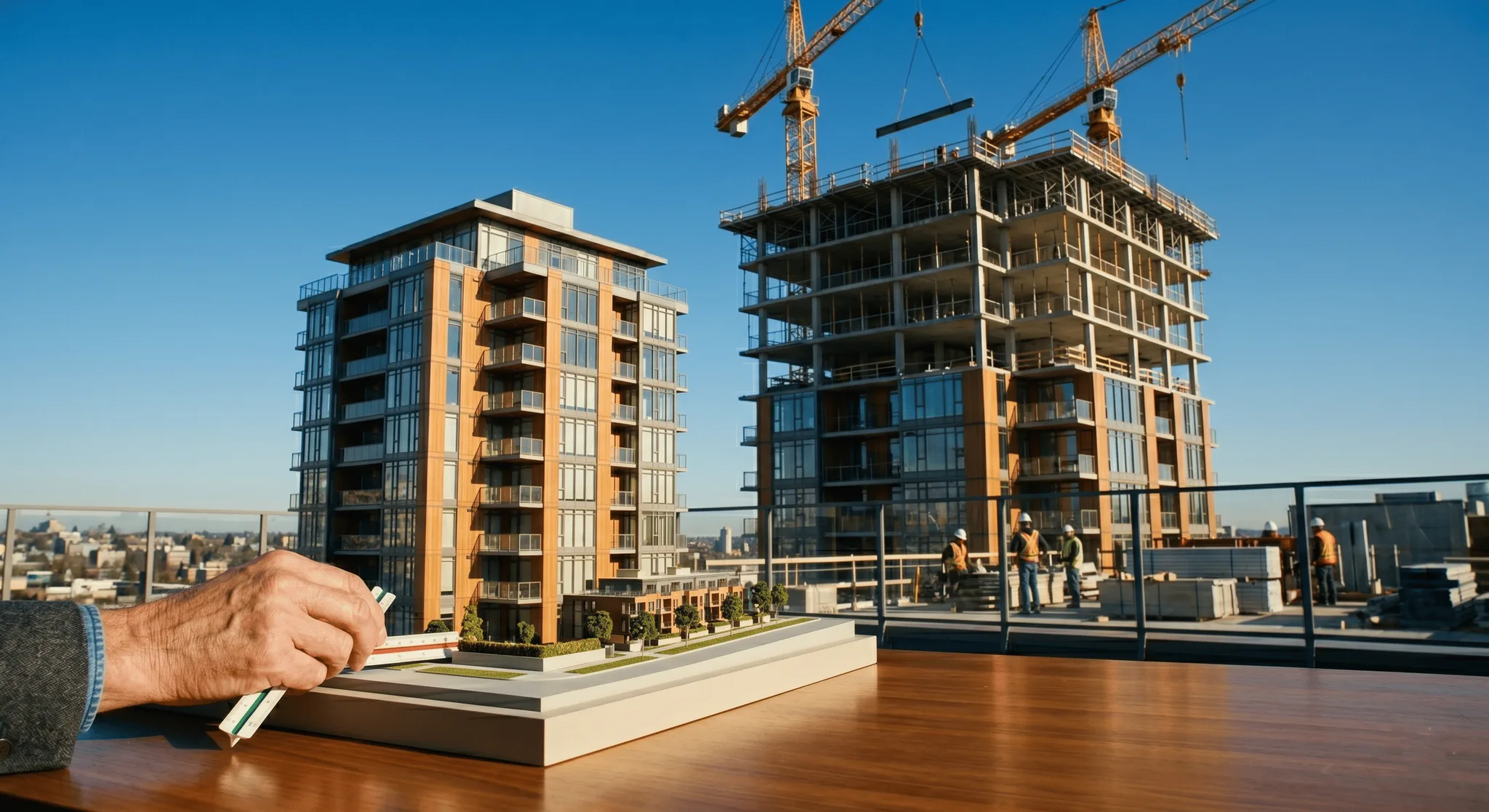
Every real estate brochure tells the same story. World-class amenities. Thoughtful design. A community built for the way you live. The renders are immaculate, the unit cuts are generous on paper, and the location pin always drops somewhere that sounds like it is minutes from everything. If you have been to enough property launches, you already know how to read past the marketing language and toward the questions that actually matter.
One of those questions — perhaps the most important one that buyers consistently underweight — is this: who exactly is building this, and what happens when things do not go according to plan? That question does not appear on any brochure. But a recent development in the Philippine property market has brought it into sharp focus in a way that every prospective buyer should pay close attention to.
What happened with Laurean Residences — and why it matters
A CASE STUDY IN HOW DEVELOPER CHARACTER SHOWS UP UNDER PRESSURE
In April 2026, Ayala Land Inc. announced that it was pausing sales of Laurean Residences, its flagship luxury residential tower within the Dela Rosa Gardens development along Paseo de Roxas in Makati. The project — a 65-storey high-end development offering units from suites to four-bedroom residences — had already recorded roughly P10.4 billion in pre-sales since its launch. Construction had begun just months earlier. By any measure, this was one of the most high-profile residential projects in the country at the time of its pause.
The reason cited was the escalating impact of the Middle East conflict on global construction costs and delivery timelines. Rising cost pressures and delivery timeline uncertainties brought about by the ongoing conflict had affected the company's ability to execute the project with the level of certainty it commits to customers. In a market where developers routinely absorb cost overruns quietly and push delivery dates back without formal acknowledgment, Ayala Land did something notably different: it made the rare and unprecedented call to pause one of its biggest luxury towers despite booking over P10 billion in pre-sales.
ALI said it had reached out to buyers directly to discuss next steps and the range of options available to them, with the care and attention they expect from ALI. Industry observers noted that this was the first time the company had paused a project in this manner. Previous high-profile projects like Two Roxas Triangle had been delayed, but the current move suggested a greater sense of urgency.
One industry insider's reaction to Ayala Land's decision was telling. "They're brave to put it out there," the source said — an acknowledgment that transparency of this kind is not the industry norm. The instinct among many developers when faced with cost escalation or delivery uncertainty is to say as little as possible for as long as possible, leaving buyers to find out about delays secondhand or not at all until the consequences are unavoidable.
The Laurean Residences situation is not primarily a story about a project being paused. It is a story about how a developer with a long-standing reputation for integrity chose to handle an adverse situation — and how that choice, while commercially costly in the short term, is precisely the kind of behavior that justifies the trust premium that established developers command in the market.
The pre-selling model and the trust it requires
UNDERSTANDING WHAT YOU ARE ACTUALLY BUYING OFF-PLAN
The dominant mode of real estate sales in the Philippines is pre-selling — purchasing a property that does not yet exist in its finished form, based on plans, renders, and a developer's promise to deliver it at a specified future date at the quality represented in the marketing materials. This model serves a legitimate purpose: it allows developers to fund construction using buyer equity rather than debt alone, and it allows buyers to lock in prices before a project is completed, sometimes realizing meaningful appreciation between purchase and turnover.
But the pre-selling model is built entirely on trust. When you sign a contract to purchase a pre-selling condominium unit, you are not buying a finished apartment — you are buying a contractual commitment from a developer. The quality of that commitment depends entirely on who made it. The renders cannot be held accountable. The brochure cannot be sued. Only the developer can be.
This is why developer reputation is not a soft consideration that belongs somewhere below price and unit cut in the hierarchy of purchase criteria. It is a fundamental risk variable. The question is not just whether the developer will finish the project — most eventually do, in some form — but whether they will finish it on the timeline represented, at the quality promised, with the amenities shown, and with honest and timely communication when circumstances change.
A brief historical note: the pre-selling model in the Philippines is regulated under Presidential Decree 957, known as the Subdivision and Condominium Buyers Protective Decree, enacted in 1976. PD 957 requires developers to obtain licenses to sell before offering units to the public and imposes obligations around delivery timelines and buyer protections. The law exists precisely because the history of Philippine real estate includes developers who took buyer payments and delivered nothing, or delivered something far below what was promised. Regulation was the response to abuse. Reputation is the market's ongoing signal of who can be trusted beyond the minimum that regulation requires.
What developer reputation actually means in practice
BEYOND THE BRAND NAME ON THE FACADE
Reputation in real estate development is not simply about name recognition. It is a composite signal built from a track record of specific behaviors over time, and it is worth understanding what that track record actually consists of.
Delivery record is the most fundamental component. Does the developer have a history of completing projects and turning over units within a reasonable window of the committed timeline? Delays of six to twelve months are common in the industry and generally considered acceptable. Delays of several years, partial deliveries, or projects that were never completed are a different matter entirely. Before purchasing from any developer, research their completed projects. Visit if you can. Talk to existing buyers and residents about their turnover experience.
Construction quality is the second component. A delivered unit is not necessarily a well-built one. Common complaints among Philippine condominium buyers include water seepage, poor finishing, defective fixtures, and common area amenities that do not match what was shown during the sales process. Developers with strong reputations invest in quality control because they know that the experience of buyers in completed projects is the primary source of credibility for future launches. Developers who cut corners typically do so because their sales model depends on new buyers who have not yet experienced the product rather than repeat buyers and referrals from satisfied ones.
Buyer communication under pressure is the third component — and the one that the Laurean Residences situation illuminates most clearly. Every major construction project eventually encounters something unexpected: weather events, supply chain disruptions, regulatory delays, cost escalations, or global shocks. What distinguishes developers is not whether these things happen to them, but how they respond when they do. A developer who communicates proactively, offers honest assessments of timelines, and provides buyers with real options when circumstances change is demonstrating something that no marketing material can manufacture: genuine accountability to the people who trusted them with their money.
Financial stability is the fourth component. Developers are essentially long-duration construction businesses with significant fixed cost structures. Their ability to complete projects depends on their financial health over the entire construction period, which can span three to five years or more for large developments. A developer with a strong balance sheet, diversified revenue streams, and conservative leverage ratios is better positioned to absorb shocks — cost escalations, sales slowdowns, rising interest rates — without compromising their delivery obligations. A developer who is thinly capitalized and heavily dependent on pre-selling receipts to fund ongoing construction is one cost shock away from a delivery crisis.
The market signal that reputation creates
WHY ESTABLISHED DEVELOPERS COMMAND A PREMIUM AND WHY THAT PREMIUM IS RATIONAL
In the Philippine property market, units from established developers — Ayala Land, SM Prime, Megaworld, Rockwell Land, Federal Land, and a handful of others — consistently command price premiums over comparable units from less established names. This premium is sometimes attributed to marketing, to brand prestige, or to the quality of the location, all of which play a role. But the deepest source of the premium is something more fundamental: it is the market pricing in the reduced uncertainty that comes with buying from a developer whose track record is verifiable and whose accountability is credible.
When you buy a pre-selling unit from a developer with twenty years of completed projects and a reputation for standing behind its commitments, you are purchasing a different product than an identical-looking unit from a developer whose track record is thin or unknown — even if the unit specifications on paper are the same. The difference is not in the renders. It is in the probability that what is shown in those renders will actually be delivered, on something close to the promised timeline, at the quality represented.
This is also why the Laurean Residences decision — however inconvenient commercially — is ultimately consistent with reputation management rather than contrary to it. Ayala Land moved to quell concerns, pointing to its strong balance sheet and considerable financial buffers to absorb shocks. By choosing transparency over delay, by reaching out individually to affected buyers, and by offering clear options rather than vague reassurances, the company was making a long-term investment in the credibility that its future launches depend on. The short-term cost was real — Ayala Land's shares lost 4.2 percent to P15.10 apiece, its lowest level in about 15 years. But the alternative — pressing forward with a project whose cost and delivery assumptions had broken down, and then managing the fallout of a delayed or compromised delivery — would have been far more damaging to the reputation that decades of consistent behavior had built.
Red flags to watch for when evaluating a developer
PRACTICAL SIGNALS THAT SEPARATE CREDIBLE BUILDERS FROM PROBLEMATIC ONES
Not every buyer has the resources or the time to do exhaustive research on every developer they consider. But there are specific signals that, when present, warrant serious caution before committing to a purchase.
An absence of completed projects is the most basic red flag. If a developer is offering pre-selling units but has no finished developments you can actually visit and inspect, you have no empirical basis for trusting their delivery promises. A developer's first project is inherently more speculative than their tenth. That does not mean first projects are bad investments, but the risk profile is different and should be priced accordingly — which often means negotiating harder on price or payment terms.
Consistently delayed past projects are another signal that deserves weight. Some delays are genuinely unavoidable. Systematic, multi-year delays across multiple projects suggest either operational problems, financial instability, or a culture of overpromising on timelines that buyers will eventually experience firsthand. Talk to buyers of the developer's previous projects before you commit to a new one. Their experience is the most reliable preview of yours.
Pressure tactics and unusually aggressive sales approaches are worth noting. Developers whose sales teams create artificial urgency — seats are running out, prices are increasing next week, this is the last unit at this level — are often operating in a model where velocity of sales matters more than the quality of the buyer relationship. This is not always a sign of a problematic developer, but it is a signal to look more carefully at who exactly you are dealing with.
Vague or evasive answers to specific questions about project timelines, construction progress, and financial backing are a serious warning sign. A developer confident in their ability to deliver should be able to answer direct questions directly. Deflection, overly general assurances, and reluctance to provide documentation when asked are behaviors that warrant skepticism rather than benefit of the doubt.
Finally, check the developer's license to sell with the Department of Human Settlements and Urban Development. Under PD 957, developers are required to secure a License to Sell before offering units to the public. Purchasing from an unlicensed developer eliminates the regulatory protections that licensed transactions carry, including the right to a refund under the Maceda Law for buyers who have paid for at least two years.
What the current market environment means for buyers
WHY REPUTATION MATTERS EVEN MORE WHEN CONDITIONS ARE UNCERTAIN
The broader context of the Laurean Residences pause is worth understanding. Analysts warned that similar suspensions could emerge across the Philippine property sector as the Middle East conflict showed no clear resolution, raising the likelihood of sustained increases in construction costs. The Philippine Constructors Association estimated costs to rise ten to thirty percent — large enough to hurt margins and the viability of projects still in their early stages.
This environment — one where construction costs are elevated, pre-selling demand has softened, and some developers are navigating genuine financial pressure — is precisely the environment where developer reputation matters most. When market conditions are favorable and construction costs are stable, even a weakly capitalized developer can deliver a project. When conditions turn adverse, the developers whose projects survive intact and whose buyers are treated with integrity are the ones with the financial depth and the institutional culture to absorb the pressure.
Buyers who prioritize price above all else in this environment are effectively taking on the financial and operational risk of their chosen developer's stress test. That is a risk that does not appear in any brochure and cannot be recovered through any legal remedy if the developer ultimately cannot deliver.
The brochure will always be beautiful. The renders will always show a finished product that looks better than anything you have seen in person. The sales team will always be friendly, the payment terms will always be structured to feel accessible, and the launch event will always create a sense of momentum and excitement that is designed to make you feel like missing out would be a mistake.
None of that is who you are actually buying from. You are buying from an organization with a history, a financial position, an operational culture, and a track record of decisions made when circumstances were difficult. That organization is what will either deliver your unit or explain to you years from now why it cannot. Spending the time to understand who that organization actually is — before you sign anything — is not excessive caution. It is the most important research you can do in a pre-selling transaction, and it is research that no brochure will ever do for you.
DISCLAIMER
This article is intended for general informational purposes only and does not constitute legal, financial, or real estate advice. References to specific developers, projects, and news events are included for illustrative purposes based on publicly available information at the time of writing. Market conditions and developer circumstances are subject to change. Readers are encouraged to conduct independent due diligence and consult with a licensed real estate broker and qualified legal counsel before making any property purchase decision. The author and publisher assume no liability for actions taken based on the information provided in this article.