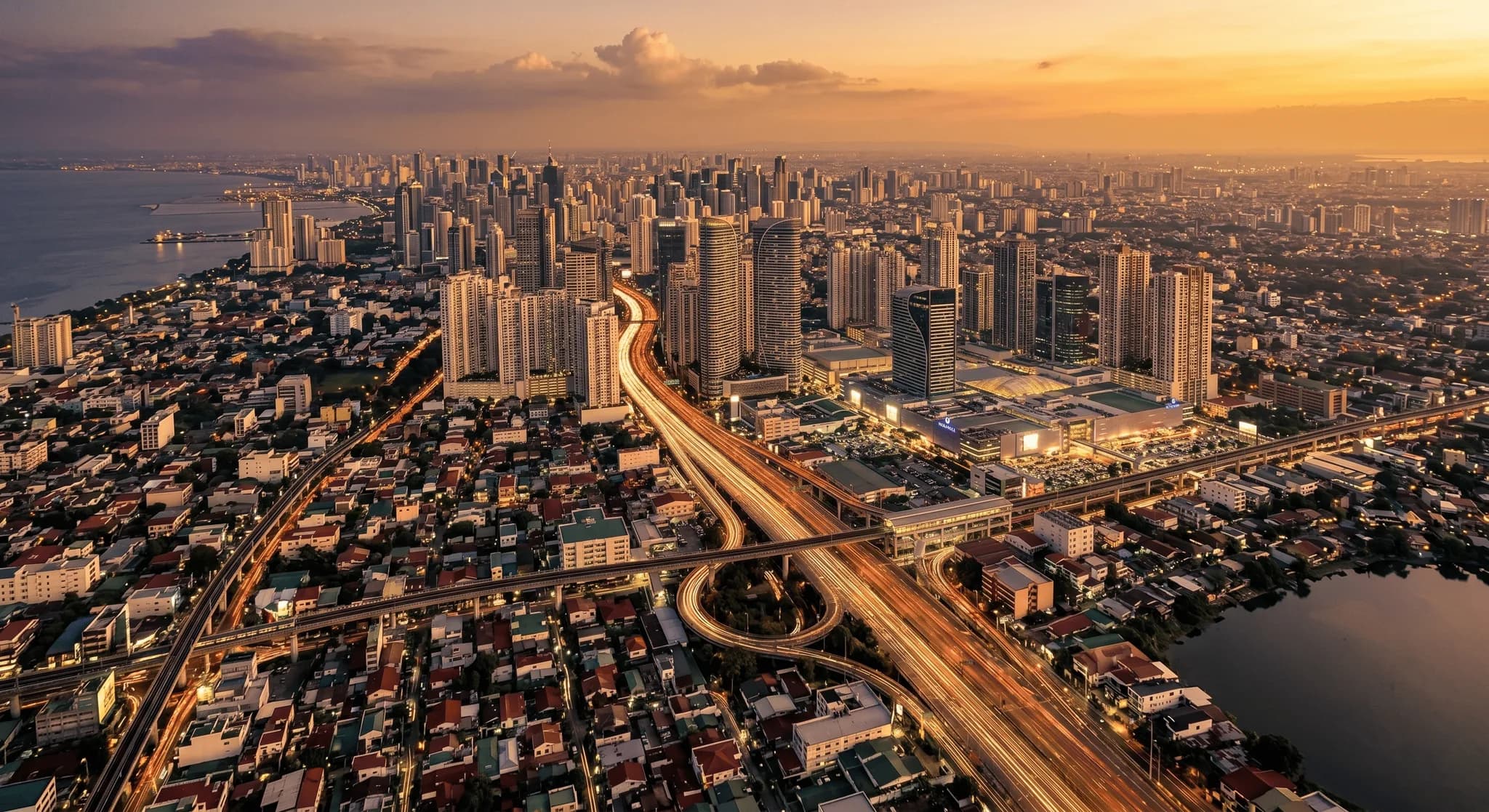
Every generation of real estate buyers seems to rediscover the same lesson: you can renovate a house, you can repaint walls, you can replace fixtures and upgrade finishes — but you cannot move the land it sits on. Location is the one variable in real estate that is permanently fixed, and in the Philippine context, that permanence has consequences that play out over decades in ways that affect property values, rental demand, resale liquidity, and quality of life in ways that no amount of interior design can compensate for.
This guide is not about telling you that location matters — you already know that. It is about explaining precisely why it matters the way it does in the Philippines specifically, what the local factors are that drive location value here, how to read a location before you buy, and why some of the most common shortcuts buyers take when evaluating location tend to cost them later.
The fixed nature of land and what it means for value
WHY LOCATION IS THE ONLY THING YOU CANNOT CHANGE
Real estate is unique among major asset classes because one of its most important attributes is completely immovable. A stock can be sold and replaced with a better one. A business can be relocated. Even a structure can be demolished and rebuilt. But land — and by extension, the location of whatever sits on it — is fixed in perpetuity. Whatever surrounds a property today, and whatever surrounds it twenty years from now, is largely beyond the control of the individual owner.
This is why experienced investors consistently prioritize location above all other property attributes. A poorly maintained property in a great location can be improved. A beautifully finished property in a poor location will always carry that location's limitations, no matter how much money is put into it. The ceiling of what a property can be worth is set, more than anything else, by where it sits.
In the Philippines, this principle plays out with particular intensity because of how dramatically land values can differ across very short distances. A condominium unit in Bonifacio Global City and one in a secondary location thirty minutes away can differ in price per square meter by a factor of three or four — not because the unit in BGC is three times better built, but because the location commands a premium that reflects everything surrounding it: the infrastructure, the tenant base, the commercial ecosystem, the security, and the prestige that comes from being in a well-established central business district.
A useful historical reference: Makati's Ayala Center area was largely undeveloped agricultural land in the 1950s. The deliberate, long-term development investment by the Ayala group — infrastructure, commercial anchors, residential enclaves, and sustained urban planning — transformed that land into some of the most valuable real estate in the country over the course of several decades. Buyers who got in early, when the location was not yet what it is today, captured that entire appreciation. The lesson is not just that good locations hold value — it is that emerging good locations, identified early, can create extraordinary returns.
What actually drives location value in the Philippines
THE LOCAL FACTORS THAT MATTER MOST
Location value is not abstract. It is driven by specific, identifiable factors that can be researched and assessed before a purchase. In the Philippine context, the most significant of these are the following.
Proximity to employment centers is probably the single most powerful driver of residential demand in Metro Manila and other major cities. People need to live within a reasonable commute of where they work, and in a country where traffic congestion is a daily reality, "reasonable" is a relative term measured in time rather than distance. A property that is thirty minutes from Makati CBD during off-peak hours may be ninety minutes away during the morning rush. Properties that are genuinely close — walkable or within a short commute — to major employment centers command persistent rental demand from professionals and consistent capital appreciation over time because that proximity cannot be replicated elsewhere.
Infrastructure access is closely related. The presence of major roads, expressways, and mass transit lines has a direct and measurable effect on property values in the Philippines. The opening of the MRT Line 3 in the late 1990s meaningfully increased values along its corridor. The BGC bus route connecting Fort Bonifacio to Makati improved demand for units in both areas. Ongoing infrastructure projects — new expressways, LRT and MRT extensions, the Metro Manila Subway — are already being priced into surrounding real estate in anticipation of the access they will provide when completed. Buying ahead of confirmed infrastructure is one of the classic value plays in Philippine real estate, though it requires the patience to wait for the infrastructure to materialize.
The commercial ecosystem surrounding a property matters enormously for both quality of life and rental attractiveness. Access to supermarkets, hospitals, schools, restaurants, and retail is something tenants and buyers factor into their decisions even when they do not articulate it explicitly. A property within walking distance of a major mall, a hospital, and a good school commands a different conversation than one where all of those require a car trip in traffic. In the Philippine context, the presence of a major mall is often used as a shorthand for a commercially viable area — not because the mall itself is the value driver, but because malls tend to locate where the population density and purchasing power already exist, making them a signal of underlying demand rather than its cause.
Flood risk is a location factor that is specific to the Philippines and is severely underweighted by many buyers, particularly first-time purchasers. The country's geography — low-lying coastal and riverine areas, heavy seasonal rainfall, and limited drainage infrastructure in older urban areas — means that flooding is a real and recurring risk in many parts of Metro Manila and other major cities. A property in a flood-prone area carries a persistent discount in rental demand and resale value, higher insurance costs, and the practical burden of dealing with floodwater damage after every major storm. PAGASA flood maps and the PHIVOLCS hazard maps are publicly available resources that every buyer should consult before purchasing. A property that floods regularly is a location problem, not a property problem — and it cannot be fixed.
Peace and order, often discussed euphemistically as "safety" or "security," is another location variable that buyers in the Philippines factor in heavily. Gated subdivisions and condominium developments with 24-hour security exist precisely because the market has consistently demonstrated that buyers will pay a premium for a perception of safety. Beyond the physical security environment, the general character of a neighborhood — how well maintained it is, the socioeconomic profile of surrounding developments, the presence of informal settlements nearby — affects both quality of life and the long-term trajectory of property values.
Zoning and land use regulations determine what can be built around a property now and in the future. A residential property adjacent to land zoned for commercial or industrial use may find itself next to a warehouse, a bus terminal, or a commercial establishment in the future — transformations that can significantly affect its desirability. Checking the zoning classification of surrounding land before purchasing is basic due diligence that many buyers skip, and it is a mistake that tends to surface only after the fact.
How Metro Manila's geography shapes location value
READING THE URBAN LANDSCAPE
Metro Manila is not a single real estate market — it is a collection of overlapping sub-markets, each with its own supply-demand dynamics, price trajectories, and tenant profiles. Understanding how these sub-markets relate to each other is essential for making informed location decisions.
The established central business districts — Makati CBD, Bonifacio Global City, Ortigas Center, and to a growing extent Quezon City's Triangle area — sit at the top of the value hierarchy for commercial and high-end residential real estate. These areas have deep tenant pools, established infrastructure, and the kind of institutional presence that sustains long-term demand. They are expensive to enter, but they are also the most liquid — properties here are easier to sell and easier to rent because the demand is broad and consistent.
The next tier consists of emerging business districts and transit-connected residential corridors that are benefiting from infrastructure investment and urban expansion. Areas like Alabang in the south, the Bay Area reclamation developments, Eastwood and the Libis corridor in Quezon City, and the expanding developments along C5 represent locations where values have been rising as Metro Manila's commercial footprint expands outward. These areas offer higher potential upside than the established CBDs but also carry more uncertainty about the pace and sustainability of that growth.
Beyond Metro Manila, provincial cities with strong economic bases — Cebu, Davao, Iloilo, Bacolod, Clark-Pampanga — represent a third market category that has grown significantly in importance over the past decade. The decentralization of BPO operations, infrastructure investment outside the capital, and rising provincial incomes have created genuine real estate demand in these cities that did not exist at the same scale a generation ago. For buyers willing to look outside Metro Manila, location analysis in these markets follows similar principles but requires familiarity with local economic drivers that are different from Metro Manila's.
The mistakes buyers make when evaluating location
COMMON SHORTCUTS THAT TEND TO COST LATER
The most common mistake is confusing a low price with a good deal. A property may be inexpensive because the location genuinely has limited demand, limited infrastructure, persistent flooding, or poor peace and order. The price is telling you something. Before concluding that a low-priced property is undervalued, make sure you understand why it is priced the way it is — because sometimes the market has already done the math correctly.
The second common mistake is evaluating a location based on current conditions rather than trajectory. A neighborhood that is rough today but has confirmed infrastructure investment and active private development coming in may be a better buy than a neighborhood that is comfortable today but has no meaningful development on the horizon. Trajectory matters as much as current state, and reading it requires looking at what is actually being built, what government infrastructure projects are funded and underway, and what the surrounding land use trends suggest about the future character of the area.
Visiting a property only at one time of day is a third mistake. A location that feels quiet and accessible on a Saturday afternoon may be congested and noisy on a weekday morning. A street that seems fine during the day may have a different character at night. Visit at multiple times and on different days before committing — particularly for properties you plan to occupy rather than rent out.
Ignoring the micro-location within a larger area is another error. Being "in BGC" or "in Makati" does not guarantee a good location — it depends on exactly where within those areas the property sits. A unit on the ground floor of a building next to a busy road is a different location from a high-floor unit in a quieter section of the same district. Within any given area, the specific street, the surrounding buildings, and the immediate environment matter as much as the general location.
Finally, underweighting flood risk because the property looks fine is a mistake that the Philippines' climate makes particularly consequential. A property may have never flooded in the seller's memory, but that memory may only go back a decade. Check the official hazard maps. Ask neighbors who have been in the area for a long time. Look at satellite imagery after major rainfall events if available. Flood history is not always disclosed proactively, and the consequences of finding out after purchase are significant.
Location and rental yield — what investors need to know
HOW LOCATION DRIVES INCOME-PRODUCING REAL ESTATE
For investors, location affects not just property value but the quality and consistency of rental income. The best rental locations share a few characteristics: they are close to a large and stable employment base, they have good infrastructure and commercial amenities, and they attract tenants who have the financial capacity to pay market rents consistently.
Proximity to BPO offices and corporate headquarters drives consistent demand for studio and one-bedroom units from young professionals who prioritize location over space. Areas like Eastwood, McKinley Hill, Alabang, and the established CBDs have benefited from this dynamic for years. The BPO sector in particular has created a tenant base that is salaried, relatively mobile, and willing to pay for convenience — making it one of the most reliable sources of rental demand for residential condominium investors.
University belts create a different kind of rental demand — high volume, lower per-unit income, and higher turnover. Properties near major universities in Quezon City, Manila, and Cebu can achieve strong occupancy rates but require more active management and generally attract different tenants than corporate residential locations. Understanding which tenant profile you are targeting helps determine which location actually serves your investment goals.
Gross rental yields in Metro Manila's prime locations have historically ranged from four to six percent annually, with the best locations at the lower end of that range because capital values have risen faster than rents. This is not necessarily a problem for a long-term investor — the capital appreciation component of the return can be substantial — but it means that investors who need strong current income should look at secondary locations where yields are higher, while accepting that capital appreciation may be slower and liquidity thinner.
How to properly evaluate a location before buying
A PRACTICAL FRAMEWORK FOR ASSESSMENT
Evaluating a location well requires going beyond a single site visit and a Google Maps check. A more thorough approach involves the following.
Start with the hazard maps. Check the PHIVOLCS and PAGASA flood hazard maps for the area. If the property sits in a high-risk flood zone, that is a constraint that affects everything else and should be known before you go further.
Then look at the surrounding land use. Walk the immediate area — not just the street the property is on, but the surrounding blocks. Note what is next door, what is across the street, and what is on the adjacent lots. Check the local zoning ordinance if you want to understand what could legally be built on surrounding vacant or underdeveloped land.
Research the infrastructure pipeline. Check DPWH, DOTr, and local government announcements for planned infrastructure projects in the area. A confirmed and funded project is meaningful. An announced but unfunded one is speculative. Know the difference.
Talk to people who are already there. Neighbors, building administrators, and local business owners are often the best source of ground-truth information about an area — its flooding history, its security situation, its noise levels, and the general direction it seems to be heading. These conversations take time but consistently surface information that formal due diligence does not.
Compare prices across the area. Pull recent transaction data or listing prices for comparable properties in the same and surrounding locations. If the property you are considering is priced significantly below comparable properties nearby, understand why before assuming it is a bargain.
The reason location beats everything in real estate is not a cliché — it is a structural truth about how property values are formed and sustained over time. Everything about a property can be changed except where it is. That permanence is what makes location the foundation of every sound real estate decision, whether you are buying a home to live in, a unit to rent out, or land to hold for the long term.
In the Philippine market specifically, where infrastructure gaps, flood risk, traffic congestion, and rapid urban development create wide variations in location quality across very short distances, the discipline of getting location right before anything else is not just good practice — it is the difference between a property that works for you over time and one that you eventually wish you had thought harder about before buying.
DISCLAIMER
This article is intended for general informational purposes only and does not constitute legal, financial, or real estate advice. Market conditions, infrastructure timelines, zoning regulations, and other factors discussed in this article are subject to change. Readers are encouraged to conduct independent research and consult with a licensed real estate broker, a qualified attorney, and relevant government agencies before making any property purchase decision. The author and publisher assume no liability for actions taken based on the information provided in this article.