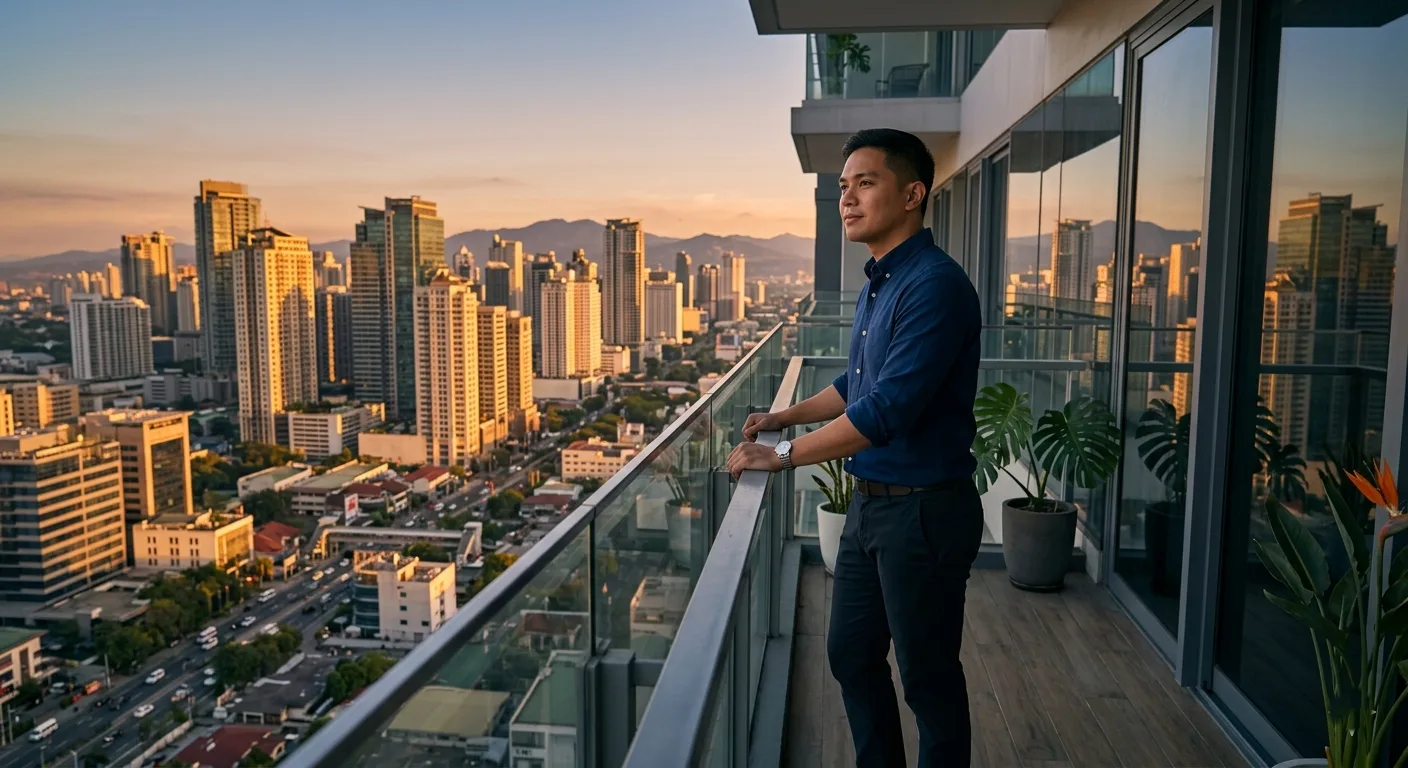
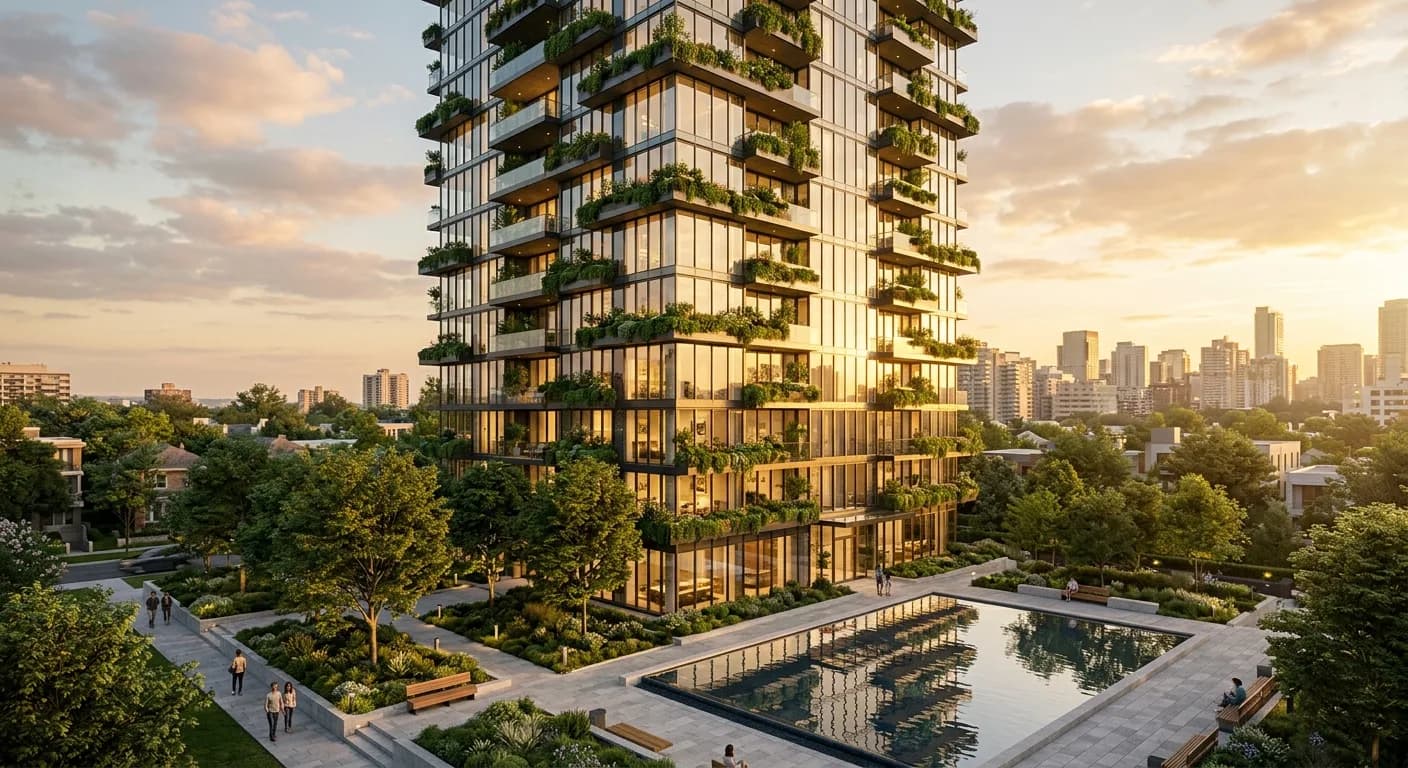
The headline sounds counterintuitive. Construction costs are elevated. Some of the country's biggest developers have paused or cancelled projects. Global news is unsettling. Interest rates, while easing, are not back to the historic lows that made pre-pandemic property purchases feel like easy math. If you are waiting for a moment when everything looks obviously good before you buy, this is not that moment.
But here is the thing about obvious moments: by the time they arrive, prices have already moved. The buyers who captured the best returns in BGC bought when it still looked uncertain. The buyers who got into Rockwell early did so when Makati's fringe felt like a risk. The pattern repeats consistently enough across Philippine real estate history that it deserves to be taken seriously: the windows that look uncomfortable from the outside are frequently the ones that look prescient in hindsight.
This article does not make a blanket argument that every condo in every location is worth buying today. It makes a more specific and honest case: that the current combination of market conditions, for a buyer who approaches it with the right preparation and the right criteria, represents a genuine window of opportunity that a more confident market will eventually close.
What the current market actually looks like
READING CONDITIONS WITHOUT THE NOISE
Strip away the headlines and what the Metro Manila condominium market looks like right now is this: a market in a measured pause. Developer launches have slowed significantly — Ayala Land did not launch a single new residential project in the first quarter of 2026, and several other major developers have adopted a similar posture of waiting for cost visibility before committing to new supply. Pre-selling inventory in segments outside the oversupplied POGO corridors is tighter than it has been in several years. And the secondary market — resale and pre-owned units — has softened enough in some areas that sellers who need liquidity are negotiating in ways they were not willing to during the boom years.
This combination — constrained new supply, motivated sellers in the secondary market, and a buyer pool that has been thinned by hesitance — is exactly the kind of environment where a prepared buyer has negotiating leverage that disappears the moment sentiment turns. When developers resume launches and confidence returns, that leverage goes with it.
At the same time, the underlying demand drivers have not changed. Metro Manila's population continues to grow. The urbanization trend that has been pulling provincial Filipinos toward the capital and its surrounding cities for decades has not reversed. The BPO sector, which anchors a substantial portion of the Metro Manila rental market, continues to operate — imperfectly, with some work-from-home adjustment, but structurally intact. OFW remittances, which feed a significant portion of property purchase decisions, have held up with remarkable consistency through every crisis of the past seven years. The demand that will fill the supply that developers are currently hesitant to launch is already forming.
Why developer caution is actually good news for buyers
LESS SUPPLY NOW MEANS TIGHTER INVENTORY LATER
One of the least-discussed implications of the current wave of developer caution is what it means for supply three to five years from now. The pre-selling condominium market has a long production cycle — from launch to turnover typically spans three to five years, sometimes longer. Projects that are not launched today will not be available for occupancy in 2028 or 2029. Projects that are paused or cancelled remove future supply that the market was counting on.
This matters for buyers because the oversupply narrative that has weighed on some Metro Manila segments — driven heavily by the POGO-era building boom — is already being addressed not by demand recovery alone but by supply contraction. Developers who are pulling back launches today are inadvertently tightening the supply pipeline for the second half of the decade. The buyers who purchase existing inventory now will be entering that tighter market as owners rather than as buyers competing for diminished new supply.
The historical parallel is instructive. The post-Asian financial crisis period from 1998 to 2002 saw a similar pullback in developer launches as the market absorbed the shock of the 1997 collapse. Buyers who entered during that period of hesitance — when sentiment was poor and supply was being withheld — were well-positioned when the market recovered through the mid-2000s. The mechanism is the same today: current caution creates future scarcity, and future scarcity supports value for those who bought during the pause.
Interest rates are moving in the right direction
THE FINANCING ENVIRONMENT IS IMPROVING
The Bangko Sentral ng Pilipinas has been in a rate-cutting cycle that began in 2024 and has continued into 2026. Housing loan rates at major Philippine banks have eased from their peak levels, and the direction of travel — barring a major new global shock — continues downward as the BSP manages monetary policy in an environment of moderating inflation. For buyers who need financing, the current environment is meaningfully better than 2023, and the trend suggests it will continue to improve.
This matters for the timing argument in a specific way. Buyers who lock in a purchase now — particularly through pre-selling, where the payment period spans several years before full mortgage drawdown — are entering at a moment when interest rate direction is favorable. If rates continue to ease through 2026 and 2027, buyers who purchased today will be drawing down their mortgages into a lower-rate environment than the one that deterred buyers over the past two years. The combination of current negotiating leverage and improving financing conditions is not a coincidence — it is a window that opens periodically in any property cycle and closes as conditions normalize.
The secondary market opportunity
WHERE THE MOST IMMEDIATE VALUE IS SITTING RIGHT NOW
While the new launch market has slowed, the secondary market — resale and pre-owned condominiums — is where some of the most immediately compelling opportunities exist at this moment. Several categories of seller are active right now in ways they typically are not during more buoyant market conditions.
Investors who bought during the pre-pandemic boom and are carrying units they cannot rent at their target yield are increasingly willing to negotiate on price or terms. Pre-selling buyers who need to exit before turnover — for financial, personal, or relocation reasons — are offering units at prices that reflect their need for liquidity rather than the intrinsic value of what they are selling. Estate sales and inherited properties, a perennial but underappreciated source of secondary market supply, continue to flow into the market regardless of conditions and often at prices set by sellers whose primary motivation is resolution rather than maximization.
For a buyer with financing arranged, a clear brief on location and unit requirements, and the patience to work through due diligence properly, the secondary market right now offers a quality of choice and a degree of price flexibility that the primary market — when it is running hot — simply does not. This is a window that experienced investors recognize and move through deliberately. It is available to any buyer who approaches it with preparation rather than impulse.
What the demographics keep saying
THE LONG-TERM DEMAND CASE HAS NOT CHANGED
Whatever the short-term noise, the long-term case for Metro Manila residential property rests on demographics that are among the most favorable in Southeast Asia for sustained housing demand. The Philippines has one of the youngest populations in the region — a median age in the mid-twenties — and a large cohort of working-age Filipinos who are at or approaching the life stage where property purchase becomes a priority. Household formation rates, urbanization, and rising incomes among the professional class all point in the same direction: more people needing more housing in and around the country's major cities over the coming decades.
The national housing backlog — consistently estimated at several million units — is not a statistic that resolves quickly. It is a structural indicator of demand that exists below the market regardless of what is happening at the headline level. The condominium market serves a specific slice of that demand — urban professionals, OFF investors, young families seeking a first property — but that slice is substantial and growing.
A buyer who purchases a well-located Metro Manila condominium today is not making a bet on the next twelve months. They are making a twenty-year decision about where they will be positioned when those demographics fully express themselves in housing demand. The short-term uncertainty that is making some buyers hesitant right now will not be visible in the rearview mirror of a twenty-year holding period.
The honest caveats — because timing articles owe you these
WHAT THIS WINDOW DOES NOT APPLY TO
This is not a universal argument for buying any condo anywhere in Metro Manila. There are segments of the market where the case for buying right now is genuinely weak, and intellectual honesty requires saying so.
The Bay Area and Entertainment City corridors, which were built around POGO demand, are still working through an oversupply that will take years to absorb fully. Buying into oversupplied inventory — however attractively priced — means competing for tenants in a market where supply materially exceeds demand, and waiting for capital appreciation in an area whose demand narrative has been fundamentally disrupted. The discount is real, but so is the reason for it.
Flood-prone areas, in the aftermath of the flood control scandal, carry location risk that has been re-priced by the market for a reason. A lower price in a persistently flood-vulnerable location is not a discount — it is compensation for a risk that does not go away. Check the hazard maps. Ask the neighbors. Do not let a compelling price override a legitimate location concern.
Projects from developers whose financial health is uncertain in the current environment carry delivery risk that the general market optimism of a recovery cycle will not protect you from. The current period of stress is precisely when the difference between a well-capitalized developer and a thinly-funded one becomes consequential. The developer track record conversation is not optional in this environment.
And finally — a purchase that stretches your finances beyond what your income can sustainably support is not a good purchase in any market condition. The opportunity window the current market offers is only an opportunity if you enter it from a position of financial stability. Overextension in a good market is a mistake. Overextension in an uncertain one is a more serious one.
What a good purchase looks like right now
THE CRITERIA THAT TURN THE WINDOW INTO A DECISION
A good condo purchase in Metro Manila right now has the following characteristics. It is in a location with genuine underlying demand — proximity to a major employment center, good transit access, low flood risk, and a commercial ecosystem that supports livability. It is from a developer with a verifiable track record of completed projects and the financial depth to absorb the current cost environment without compromising delivery. It is priced at a level your income can sustain comfortably — not at the ceiling of what a bank will approve, but at a level that leaves you margin for the unexpected. And it is a property you are buying for a reason that is grounded in your actual life — whether that is a home to live in, an investment to rent out, or a long-term asset to hold — rather than a speculative bet on short-term price appreciation.
Those criteria are not unique to the current market. They are the criteria that have always defined a sound property purchase in the Philippines. What makes right now specific is that the market conditions around those criteria — negotiating room, constrained new supply, improving financing, and a buyer pool thinned by uncertainty — are more favorable than they have been for several years. That combination will not last indefinitely. It rarely does.
The best time to buy is almost never when everything looks obviously safe. By that point, prices have adjusted, competition has returned, and the leverage that uncertainty creates for prepared buyers has evaporated. The current Metro Manila condominium market is uncomfortable enough to keep many buyers on the sideline — and that discomfort is precisely what creates the conditions that historically reward those who move through it with preparation and clear criteria rather than waiting for a clarity that arrives too late to be useful.
Right now might actually be a good time to buy a condo in Metro Manila. Not because conditions are perfect. Because they rarely are — and because the buyers who understand that tend to end up in a better position than the ones who keep waiting for them to be.
DISCLAIMER
This article is intended for general informational purposes only and does not constitute legal, financial, or real estate investment advice. Market conditions, interest rates, developer circumstances, and other factors discussed in this article are subject to change. References to market trends and historical patterns are based on publicly available information at the time of writing and do not guarantee future performance. Readers are encouraged to conduct independent research and consult with a licensed real estate broker, a qualified financial advisor, and legal counsel before making any property purchase decision. The author and publisher assume no liability for actions taken based on the information provided in this article.