Can Foreigners Buy Property in the Philippines? (2026 Updated Guide)
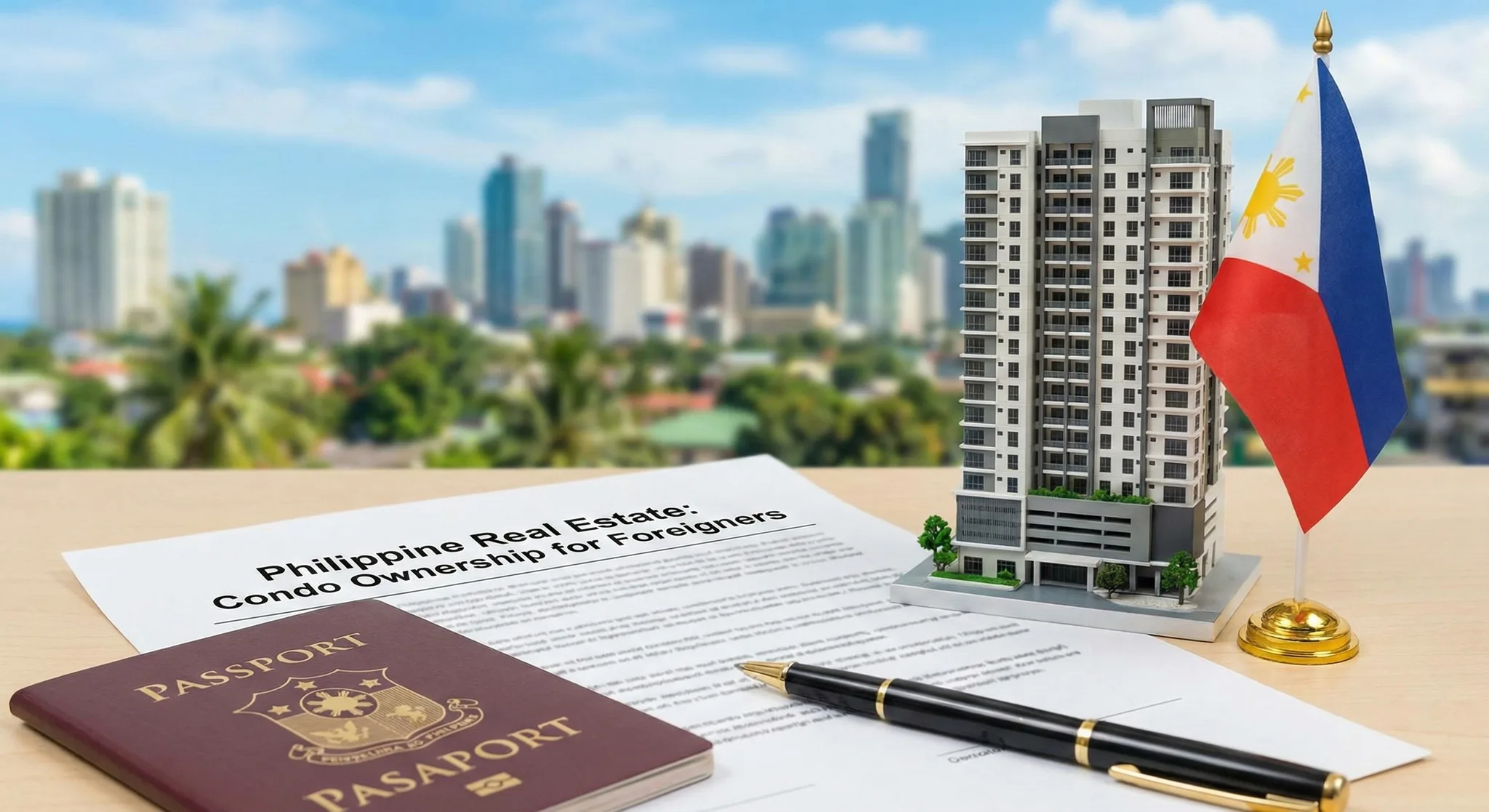
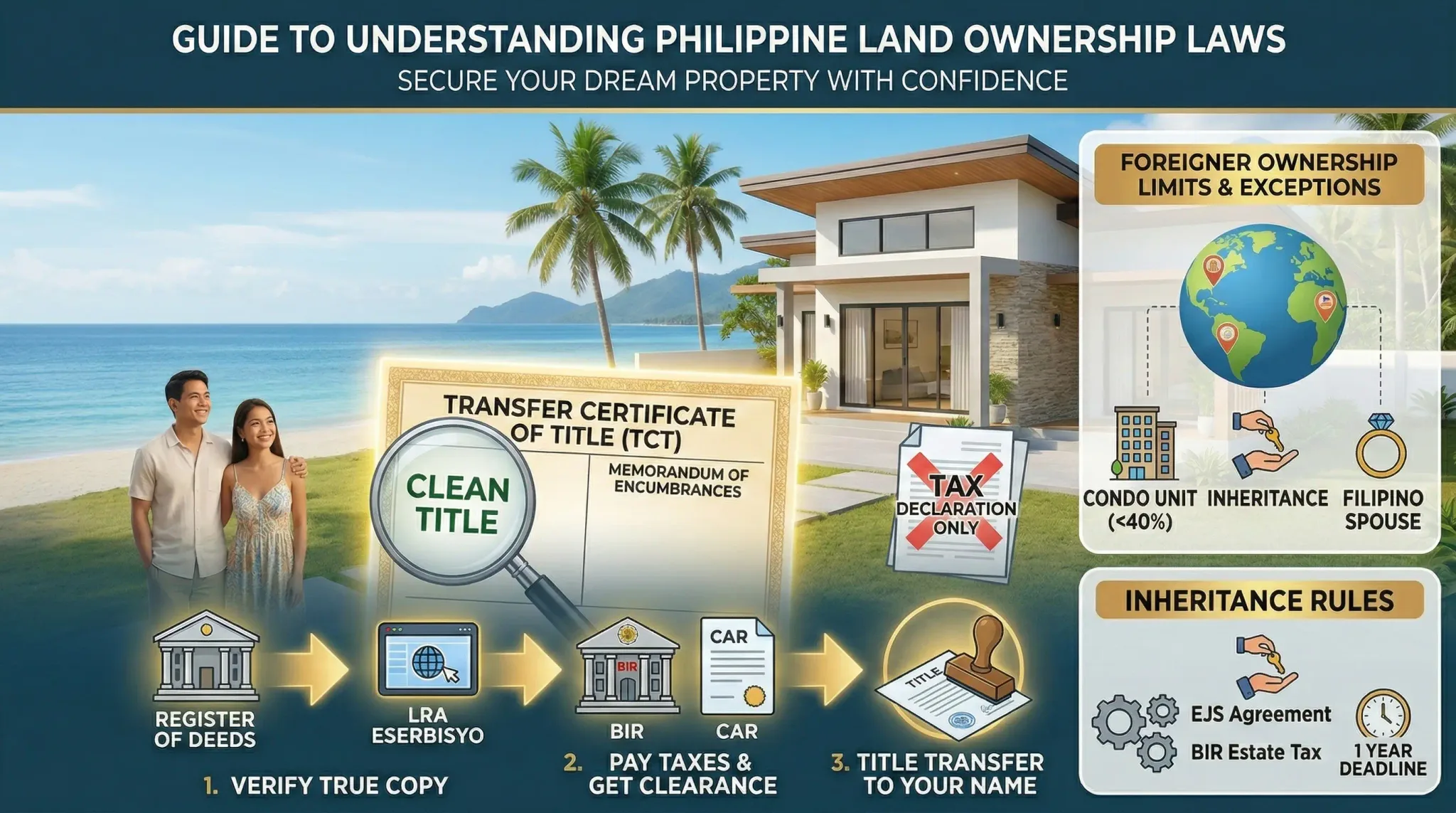
Yes, foreigners can legally buy condominium units in the Philippines, provided that foreign ownership does not exceed 40% of the total units in any condominium project. Foreigners cannot directly own land, but the Philippines now allows 99-year land leases for qualifying foreign investors as of January 2026. Married foreigners with Filipino spouses may also have additional options for land acquisition.
The Philippines is one of Southeast Asia’s most attractive real estate markets, with strong rental yields, a young and growing population, and property prices significantly lower than neighboring countries like Singapore or Hong Kong. However, foreign ownership rules create confusion for many international buyers and overseas Filipino investors helping family members purchase property.
This guide breaks down exactly what foreigners can and cannot buy, the latest legal changes in 2026, and practical steps to make a successful purchase.
What Property Can Foreigners Legally Own?
Condominium Units
Under Republic Act No. 4726 (the Condominium Act), foreign nationals may purchase condominium units in the Philippines. The key restriction is the 40% foreign ownership cap: in any given condominium project, no more than 40% of the total units may be owned by non-Filipino citizens. This means that when you find a condo you want to buy, you or your broker must verify that the building has not yet reached its foreign ownership limit.
This is the most common and straightforward path for foreign buyers. Condominiums in Metro Manila’s central business districts—Makati, Bonifacio Global City (BGC), Ortigas, and Eastwood—are especially popular with foreign investors due to strong rental demand from BPO workers and expatriates.
Land Ownership: The Restriction
The 1987 Philippine Constitution prohibits foreign nationals from owning land. This is a hard legal restriction that applies regardless of visa status, length of residency, or investment amount. There is no exception for residential land, agricultural land, or commercial lots.
The 99-Year Land Lease (New in 2026)
In a landmark policy shift, the Philippine government signed legislation in late 2025 (effective January 2026) that extends the maximum land lease period for foreign investors from 50 years (plus a 25-year renewal) to a straight 99-year lease for qualifying investment projects. This change is designed to attract foreign direct investment in industrial zones, logistics hubs, master-planned communities, and large mixed-use developments.
While this does not grant ownership, a 99-year lease provides sufficient tenure security for long-term capital planning, financing, and development. Institutional investors and developers have welcomed this reform as a game-changer for the Philippine property market.
Alternative Paths for Foreign Buyers
Marriage to a Filipino Citizen
If a foreign national is married to a Filipino citizen, the Filipino spouse may purchase land in their name. The property is considered conjugal or community property under Philippine family law. However, the foreign spouse cannot be listed as a co-owner of the land title. This arrangement is common among mixed-nationality couples who wish to build a house on a lot in the Philippines.
Corporation with 60/40 Ownership
A foreign national may form a Philippine corporation where at least 60% of the shares are owned by Filipino citizens. This corporation can then acquire land. However, this structure comes with significant compliance requirements, including SEC registration, annual reporting, and the genuine participation of Filipino shareholders. It is not a simple workaround and requires proper legal counsel.
Former Natural-Born Filipino Citizens
Under Republic Act No. 8179 (the Foreign Investments Act) and Batas Pambansa Blg. 185, former Filipino citizens who have acquired foreign citizenship may still purchase land in the Philippines for residential purposes, subject to area limitations: up to 1,000 square meters for urban land or one hectare for rural/agricultural land.
Step-by-Step Guide for Foreign Buyers
Step 1: Engage a Licensed Real Estate Broker
Working with a PRC-licensed broker is essential. A broker can verify the 40% foreign ownership cap in a condominium, conduct due diligence on the developer and title, and guide you through the documentation process. At Realty ONE Group Philippines, our network of over 600 licensed agents across 60 offices nationwide can assist foreign buyers in any major city or province.
Step 2: Verify the Property and Developer
Ensure the condominium project holds a valid License to Sell from the Department of Human Settlements and Urban Development (DHSUD). Verify the Condominium Certificate of Title (CCT) is clean and free of liens or encumbrances.
Step 3: Submit a Letter of Intent and Reservation Fee
Once you’ve selected a unit, submit a Letter of Intent (LOI) along with a reservation fee, typically ranging from ₱20,000 to ₱100,000 depending on the property’s price and location.
Step 4: Sign the Contract to Sell
The Contract to Sell (CTS) outlines payment terms, turnover dates, and penalties. Review this carefully with your broker or attorney. Many developers offer flexible payment schemes including in-house financing, bank financing through BPI, Metrobank, or BDO, and deferred payment plans.
Step 5: Complete Payment and Transfer
Upon full payment, the developer executes the Deed of Absolute Sale. The title is transferred to your name at the Registry of Deeds. You will pay capital gains tax (6%), documentary stamp tax (1.5%), and transfer tax (0.5–0.75% depending on the LGU).
Taxes and Fees for Foreign Buyers
Foreign buyers pay the same taxes as Filipino buyers. The key costs include:
Capital Gains Tax: 6% of the property’s selling price or fair market value, whichever is higher
Documentary Stamp Tax: 1.5% of the selling price or fair market value
Transfer Tax: 0.5% to 0.75% depending on the local government unit
Registration Fee: Based on a sliding scale at the Registry of Deeds
Notarial Fee: Typically 1–2% of the selling price
There is no additional “foreign buyer” surcharge or stamp duty in the Philippines, unlike some other Asian markets. This makes the Philippines one of the more cost-effective countries in the region for foreign property acquisition.
Can a foreigner buy a house and lot in the Philippines?
Not directly. A foreigner cannot own the land portion. However, a foreigner may own the building or house structure itself. The land must be leased or held through an eligible arrangement such as a Filipino spouse or a 60/40 corporation.
Can I get a mortgage as a foreigner?
Some Philippine banks offer mortgage financing to foreign nationals, though the terms are generally less favorable than for Filipino citizens. Many foreign buyers opt for developer in-house financing or pay in cash. In 2026, several major banks are running promotional waived-appraisal-fee programs to attract mid-income buyers.
Is it safe to invest in Philippine real estate as a foreigner?
Yes, provided you work with licensed professionals. The Philippines has a well-established legal framework for property rights, and condominium titles are registered and enforceable. The key risks are related to due diligence failures—such as purchasing in a building that has exceeded its 40% foreign cap or dealing with unlicensed agents.
The Bottom Line
The Philippines offers genuine opportunities for foreign real estate investors, particularly in the condominium market. The introduction of 99-year land leases in 2026 has further expanded the landscape for institutional and long-term investors. Whether you’re an expat looking for a home, an overseas Filipino helping family invest, or an international investor seeking rental income, the path forward is clear—but it requires the right guidance.
Realty ONE Group Philippines has 60 franchise offices and over 600 agents nationwide ready to help foreign buyers navigate the process from property search to title transfer. Visit realtyonegroup.ph or contact us to get started.
Disclaimer: This article is for informational purposes only and does not constitute legal advice. Consult a licensed Philippine attorney for advice specific to your situation.