Foreclosed properties have a reputation for being complicated, and that reputation is not entirely undeserved. But complicated does not mean bad — it means you need to know what you are getting into. This guide breaks down how foreclosure works in the Philippines, where the real opportunities are, and what to watch out for before you sign anything.
Most buyers hear "green building" and think one of two things — either that it sounds admirable but vague, or that it sounds expensive and impractical. Both reactions miss the actual argument. The case for eco-friendly, certified condominiums is not an environmental pitch dressed up as a real estate one. It is a financial argument grounded in lower operating costs, stronger tenant demand, and more resilient resale values. This guide breaks down why the premium on green-certified properties is, for the right buyer and the right holding period, a premium that pays for itself.
Infrastructure does not just move people — it moves money. Every time a major transit line opens in a dense urban environment, a predictable sequence follows: accessibility improves, travel times compress, and property values near the stations rise. Researchers call it the railway effect, and it has played out with enough consistency across Asian cities that serious investors treat confirmed transit infrastructure as one of the most reliable value signals available. Metro Manila is about to experience it at a scale the city has never seen before.
Buying a property in the Philippines almost always means buying from someone before the building is finished. That makes your choice of developer one of the most consequential decisions in the entire transaction — and yet most buyers spend more time comparing unit cuts than comparing the people responsible for delivering them. This guide profiles the widely recognized developers across the market's major segments, and what their histories of completed projects actually tell an investor about what to expect.
The brochure will always look good. That is what brochures are for. But when a project hits trouble — costs escalate, timelines slip, global conditions shift — the brochure is not who shows up to explain what happens next. The developer is. A recent decision by one of the country's most established property companies offers a rare and instructive look at what it actually means to buy from someone you can trust, and why that question deserves more weight than most buyers give it.
Real estate has always rewarded the agents who adapted first. The ones who embraced the MLS when others resisted. The ones who built a Facebook presence when it still felt optional. The ones who started shooting property videos before everyone else caught on. Right now, we are at one of those moments again — except this time, the window is closing faster than any of us realize. That was the core message from Michael Thorne, Inman News AI Award winner and practicing real estate agent from Vancouver, Canada, who joined us for last week's ROGPH Primetime session. He spent an hour showing our brokers and agents not just what AI is, but exactly how to put it to work today. Here are the lessons every ROGPH agent should take away.
Nobody rings a bell at the bottom of a market. The moments that look like good times to buy rarely feel that way while you are in them — and the current Metro Manila condominium market is no exception. Developers are cautious, global news is unsettling, and the easiest thing to do is wait. This article makes the case for why that instinct, while understandable, may be costing hesitant buyers more than they realize.
Seven years. Six major crises. A global pandemic, a government ban that wiped out an entire tenant class, the sharpest interest rate hike cycle in a generation, a flood control scandal that shook public trust in infrastructure promises, two separate global cost shocks driven by war. Any one of those would have been enough to rattle a fragile market. Philippine real estate absorbed all six — not without damage, but without breaking. This article traces what each crisis actually did, how the market recovered each time, and what that pattern means for the three kinds of buyers most likely to be reading this right now.
Mandaluyong has always been easy to overlook — a city people pass through on EDSA rather than one they deliberately choose. But that description has never quite matched the geography. Mandaluyong sits at the center of Metro Manila, touching more cities than any other local government unit in the metropolis. With a new wave of infrastructure now arriving, that central position is finally being converted into the kind of accessibility that changes how a city is valued. This piece makes the case for why.
You have probably heard it a hundred times — location, location, location. But hearing it and actually understanding what it means in the Philippine context are two different things. This guide breaks down why location is the one variable in real estate that no amount of money, renovation, or good timing can override, and what specifically to look for when evaluating a location before you commit to a purchase.
Most guides on foreclosed properties spend a lot of time on whether you should buy one. This one assumes you have already done that thinking and are ready for the next question: how, exactly, does the process work? Buying a foreclosed property in the Philippines follows a specific sequence, and knowing that sequence in advance is what separates buyers who close cleanly from those who get stuck — or lose their deposit because they were not prepared for what came next.
Code of Ethics, Prohibited Practices, Penalties, and the Complaint Process
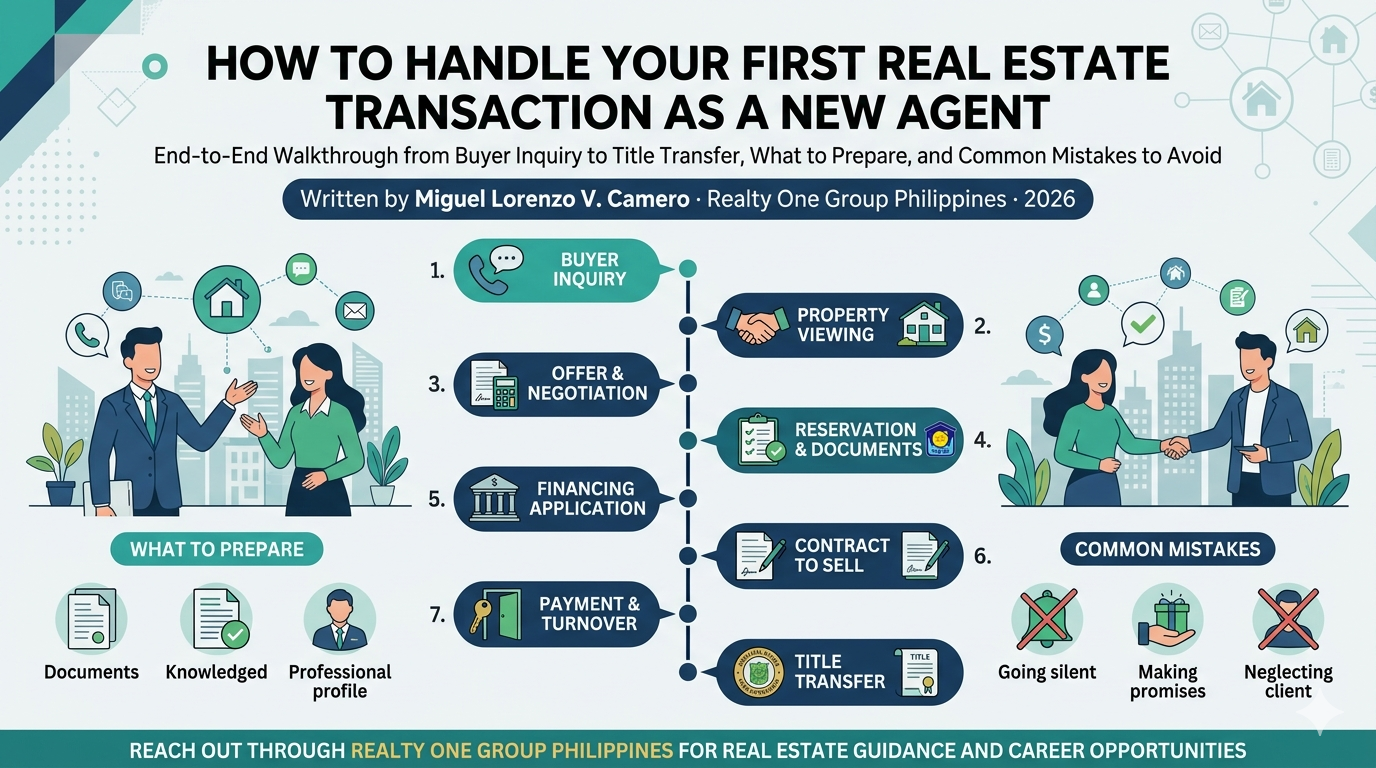
End-to-End Walkthrough from Buyer Inquiry to Title Transfer, What to Prepare, and Common Mistakes to Avoid
.png)

.png)



.png)
.png)
.png)
.png)
.png)